"Images seem to speak to the eye, but they are really addressed to the mind.
They are ways of thinking, in the guise of ways of seeing."
--William Duff
Colossal Statue of Amenemhat II
1919 - 1885 BCE
 |  |
|---|---|
 |  |
 |  |
Material: granodiorite
Size: 10ft. 6in. high, 3ft. 7in. wide, 6ft. 10in. deep.
I have provided you with several images:
-
Images 1-3 show the sculpture from different angles
-
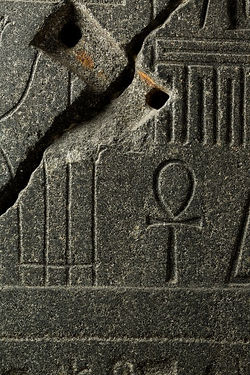
Image 4 shows parts of the sculpture that were recarved during its history--see below
-
Image 5 shows an area where the sculpture was repaired in ancient times--see below
-
Image 6 is a map showing the different places where this sculpture moved during its history--see below
First, take a minute or two to look closely at the first three images above. Write down your reaction to this statue--what did you think about when you first saw this? What parts of this statue caught your eye? Why did you pick this object for your response paper? Make notes on things that you notice about it. Also, write down any questions you have about it--what kinds of things would you want to know about this object? Remember the questions we ask in class. You don't need to have answers for these questions yet, but keep them in your notes.
Once you have some questions written down, try to answer them by reading the information I've provided below about this object and its context.
Context: Where Was It Found?
This statue had a rather long and interesting life.
It was first produced for the pharaoh Amenemhat II, who ruled Egypt during the Middle Kingdom from 1919-1885 BCE. We know this because his name was noted in the hieroglyphs carved onto the sculpture. Colossal seated sculptures like this were often produced in pairs, and placed at the entrances of temples as guardian figures.
600 years later, in 1279 BCE, the New Kingdom pharaoh Ramesses II took the throne of Egypt. He ruled for 66 years, and died in 1213 BCE; he was succeeded by his son Merneptah. Perhaps in part because he ruled for so long, Ramesses II oversaw the construction of many temples and statues. At this time, the statue was extensively recarved. The facial features were altered to look more like Ramesses II, and most of the hieroglyphs were recarved to list the titles and accomplishments of Ramesses II. Archaeologists know that Ramesses II founded a new capital city at Piramesse, and it is thought that this statue was moved there. The new hieroglyphs mention all the prominent gods and goddesses worshipped at Piramesse, connecting the statue to this site. Later, Merneptah's name was added to his father's. If you are curious about the meaning of the hieroglyphs, the Metropolitan Museum has a summary of the inscriptions here (scroll down and click "Curatorial Interpretation").
About 200 years later, the city of Piramesse was abandoned. At this time, the statue was moved to Tanis to decorate a new temple of Amun. It was probably during this journey that the corner of the sculpture was broken off and then repaired with a metal bar (see image 5--the metal seems to have been stolen at a later time, which was quite common in the ancient world). Also at this time, the name of the god Seth was chiseled off the sculpture. Seth was a god of war. During the reign of Ramesses II, he waged many wars and viewed Seth as a positive figure. However, by around 1000 BCE, Seth had become a less popular god, and perhaps the violence he represents was no longer welcome to the pharaohs of these later dynasties.
Several hundred years later, stonemasons tried to break this statue up to reuse it in another building. They left a row of holes where the throne meets the base (not visible in the pictures). It is not known why they stopped, but it does seem to indicate that Ramesses II was not treated with the same reverence at that time.
In modern times, a large collection of statues was excavated at Tanis and sold to various European museums. This colossus was sold to the Kingdom of Prussia in 1837, which placed it in a new museum. Although the museum was bombed during World War II, this sculpture was protected by sandbags and survived. After the war the statue was relocated to the Pergamon Museum in Berlin. In 2011 the Pergamon Museum decided to loan the statue to the Metropolitan Museum of Art in New York City, where it can be seen today (it's a long-term loan!).
Some things to consider in your response paper:
-
What was your response to this object? What drew your eye? You are encouraged to use first person (I/me) in your response paper. I want to know what you think.
-
Consider the statue carefully. Try to imagine the original artists sculpting this piece, and the later artists recarving it. What kinds of decisions did the artist make (about line, texture, scale, etc.) to create a particular impression of the pharaoh? In particular, consider the size--what would it be like to walk up to this statue, perhaps standing in front of a temple? Try to put yourself in the mind of the artist.
-
What symbols or aspects of this sculpture identify it as showing a pharaoh? What message(s) is this statue trying to send about the pharaoh and his power? What specific details in the sculpture help send this message?
-
Why do you think Ramesses II had this statue recarved, instead of carving a new statue from scratch? Consider the long history of this sculpture. Why did it continue to be viewed, recycled, and even repaired for so many hundreds of years? Incorporate the historical details above into your response paper wherever appropriate.