"Images seem to speak to the eye, but they are really addressed to the mind.
They are ways of thinking, in the guise of ways of seeing."
--William Duff
Chest of Tutankhamun
1323 BCE
 |  |  |
|---|---|---|
 |
Material: wood covered in plaster and painted
Size: 24 inches long, 17 inches high (including legs and lid)
First, take a minute or two to look closely at the images above. Write down your reaction to this object--what did you think about when you first saw this? What parts of this object caught your eye? Why did you pick this object for your response paper? Make notes on things that you notice about it. Also, write down any questions you have about it--what kinds of things would you want to know about this object? Remember the questions we ask in class. You don't need to have answers for these questions yet, but keep them in your notes.
Once you have some questions written down, try to answer them by reading the information I've provided below about this object and its context.
Context: Where Was It Found?
This chest was found in the tomb of Pharaoh Tutankhamun. The tomb was discovered in 1922 by Howard Carter, and remains the only (relatively) intact tomb of a pharaoh ever discovered. Tutankhamun was not a particularly famous pharaoh, and only ruled for maybe a decade; he is famous today mainly because of the historical accident that his tomb was lost and remained unlooted.
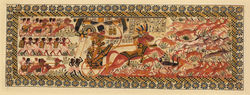
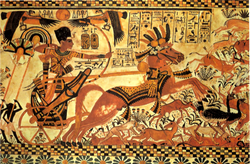
The tomb provides an extremely valuable window into the kinds of objects a typical pharaoh might have been buried with. The object above is a storage chest decorated with elaborate scenes of Tutankhamun hunting and participating in warfare. The first two images show one of the long sides of the chest; the third image shows another side, with a different scene. The fourth image shows the whole chest, so you can get an idea of what the whole object looks like. I don't know what, if anything, was stored inside the chest.
Some things to consider in your response paper:
-
What was your response to this object? What drew your eye? You are encouraged to use first person (I/me) in your response paper. I want to know what you think.
-
Consider each scene on the chest carefully. Try to imagine the artist painting this piece; put yourself into his or her mind. What kinds of decisions did the artist make (about color, scale, composition, etc.) when they were creating this piece, and why did they make those choices? By "composition" I mean choices about where certain figures in the painting should be placed, relative to other figures.
-
How should we interpret this piece of art? What kind of message(s) does it send about the pharaoh and his power? Given what we know about Tutankhamun (his physical problems and injuries, his age, etc.) do you think these images of the pharaoh are similar to scenes that happened in real life, or are they more fantasy? What can these images tell us about Tutankhamun, and about Egyptian attitudes toward the pharaoh?