"Images seem to speak to the eye, but they are really addressed to the mind.
They are ways of thinking, in the guise of ways of seeing."
--William Duff
Ceremonial Rattles
19th century
 |  |  |
|---|---|---|
 |  |  |
 |  |  |
 |  |
Material: wood, ivory, paint
Size: between 8 and 12 inches
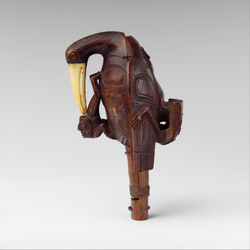
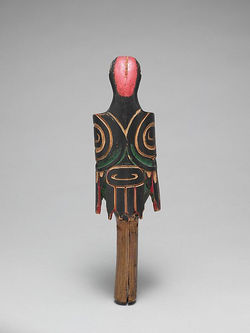
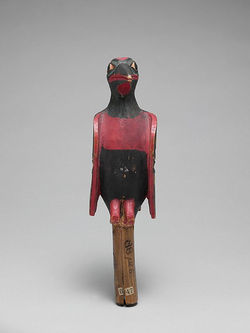
First, take a minute or two to look closely at the images above. Write down your reaction to these objects--what details do you notice? Why did you pick these objects for your response paper? Make notes on things that you notice about them. Also, write down any questions you have about them--what kinds of things would you want to know about these objects? Remember the questions we ask in class. You don't need to have answers for these questions yet, but keep them in your notes.
Once you have some questions written down, try to answer them by reading the information I've provided below about this object and its context.
What do we know about these objects?
These are ceremonial rattles which would have been shaken to produce a percussive sound during a ritual. The handle is near the Raven's feet; the rattles would have been shaken with the beak downward. I have given you images of three different rattles, viewed from different angles, so that you can appreciate all the intricate details.
While all three of these rattles show Raven, each artist has chosen to represent Raven in a different way. Pay close attention to the similarities and differences between these objects.
In the mythology of the Native tribes of the Northwest, Raven is a "trickster" figure--a mythological figure who is always causing chaos or trouble, often trying to improve his own life. He is a revered and benevolent transformer figure who helps the people and shapes their world for them, but at the same time, he is also a trickster character and many stories about Raven have to do with his frivolous or poorly thought out behavior causing trouble for him and the people around him. For example, in Haida mythology, it is Raven who first stole light (which was being hoarded by an old man) and brought it into the world. See the full story here. Humans are also frequently shown on these rattles.
Some things to consider in your response paper:
-
What was your response to these objects? What drew your eye? What do you like about them, or dislike? You are encouraged to use first person (I/me) in your response paper. I want to know what you think.
-
Consider the artistic details of these objects carefully. Describe all three of these rattles and think about the choices each artist made. How do they use color? Line? Different materials? Some include humans, some don't. What are the differences, and why do you think each artist might have made those choices?
-
Place these objects in their historical and cultural context. What did Raven mean to the peoples of the Northwest coast? Why does Raven appear on these ceremonial objects? Imagine these objects being used during a dramatic ritual by a shaman.