"Images seem to speak to the eye, but they are really addressed to the mind.
They are ways of thinking, in the guise of ways of seeing."
--William Duff
Bowls - Mimbres Culture
9th - 12th century CE
 |  |  |
|---|
Material: ceramic, paint
Size: 10-11 inches in diameter
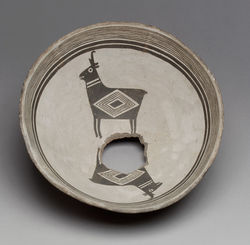
First, take a minute or two to look closely at the images above. Write down your reaction to these objects--what details do you notice? Why did you pick these objects for your response paper? Make notes on things that you notice about them. Also, write down any questions you have about them--what kinds of things would you want to know about these objects? Remember the questions we ask in class. You don't need to have answers for these questions yet, but keep them in your notes.
Once you have some questions written down, try to answer them by reading the information I've provided below about this object and its context.
What do we know about these objects?
These bowls were produced by a culture we call the Mimbres culture, living in the American Southwest. Though you may imagine many Native American groups as hunter-gatherers, the Mimbres used irrigation methods to exploit the fertile floodplains of the Mimbres River in order to produce corn, squash, beans, and other crops. The years between A.D. 1000 and 1130 mark the culture’s apex, called the Mimbres Classic period. People built pueblos, living in densely packed villages along the Mimbres River Valley, with a large increase in population during that time bringing their total numbers as high as 6,000.
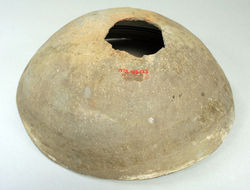
The outsides of these bowls are undecorated, but the insides show elaborate animal, mythological, or even sometimes human figures. Mimbres artists painted geometric lines and patterns on two-thirds of the bowls found and figures on about one-third. They smoothed the insides with stones, applying a fine white clay slip over brown clay, and then brushed on black paint made by mixing ground iron ore and a plant-derived binder, probably with yucca brushes. The bowls are made with local clay. Animals depicted include prey species such as deer, pronghorns, and jackrabbits; insects such as grasshoppers; spiders; snakes; and fish. They also painted feathered serpents and other mythical creatures. They portrayed ceremonial and everyday human scenes, too: a ritual dancer; a hunter bringing home a kill, trailed by dogs; a mother birthing a baby. The bowls apparently were not traded, as they rarely turn up outside Mimbres sites.
Indications from use suggest that though thoughtfully created, the bowls were not the equivalent of heirloom fine china, carefully stashed away for a grand event. Marks found on their interiors suggest they were scraped by people using spoons, which were probably made from gourd or wood since none survive. The bowls measure roughly four inches tall and vary from six to 16 inches in diameter. The large range of sizes suggests multiple functions, among them serving and eating.
Archaeologists have excavated some of these bowls, which helps us understand their context. These bowls were often found in graves, placed over the head of the deceased, with a hole punched through the bottom of the bowl. Unfortunately many more bowls have been dug up by looters and sold illegally; the looters use heavy machinery and often destroy the archaeological sites for profit before archaeologists can scientifically excavate them.
Some things to consider in your response paper:
-
What was your response to these objects? What drew your eye? What do you like about them, or dislike? You are encouraged to use first person (I/me) in your response paper. I want to know what you think.
-
Consider the artistic details of these objects carefully. What kinds of choices did the artists make? Use your art terminology.
-
Place these objects in their historical and cultural context. What kinds of animals--real or mythological--are depicted here? What might those animals have meant to the Mimbres? While these bowls have evidence that they were used in life, they were asod eposited with the dead--why would the Mimbres do this? Why would they poke a hole in the bottom of the bowl before placing it in the grave (over the deceased's head)? Think like an archaeologist! What can we learn about this culture, which left no written records, simply by looking at their objects?