"Images seem to speak to the eye, but they are really addressed to the mind.
They are ways of thinking, in the guise of ways of seeing."
--William Duff
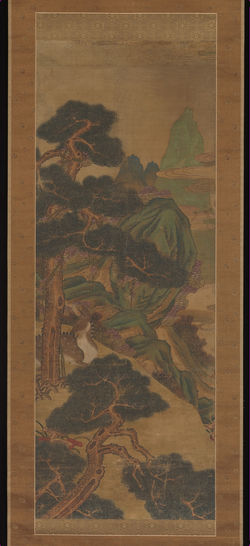
Deer Amid Pine Trees
19th century CE
 |  |
|---|
Material: ink and color on silk (hanging scroll)
Culture: Korea (Joseon dynasty)
Size: 50 inches long, 19 inches wide
First, take a minute or two to look closely at the images above. Write down your reaction to these two scrolls--what details do you notice? Why did you pick these objects for your response paper? Make notes on things that you notice about them. Also, write down any questions you have about them--what kinds of things would you want to know about these objects? Remember the questions we ask in class. You don't need to have answers for these questions yet, but keep them in your notes.
Once you have some questions written down, try to answer them by reading the information I've provided below about this object and its context.
What do we know about this object?
I have no information about who might have owned this object, or in what context it might have been displayed. Hanging scrolls were designed to be hung on a wall as decoration. However, they were not usually hung for long periods of time, and could be re-rolled and stored away to preserve them. A homeowner might rotate different handscrolls on display according to the season or occasion, just like you might change the decoration in your living space based on particular holidays or seasons. The silk has darkened over time, which is why the image looks so dark.
Compare the animals and plants you can observe in this work to the folding screen I discussed in lecture. Which symbols can you spot? What kinds of meanings did these symbols have in Korea? Refer back to the tenfold screen lecture.
Some things to consider in your response paper:
-
What was your response to these objects? What drew your eye? What do you like about them, or dislike? You are encouraged to use first person (I/me) in your response paper. I want to know what you think.
-
Consider the artistic details of these objects carefully. What kinds of decisions did the artist make when they were creating these objects, and why? Use your art terminology.
-
What do the symbols on each of these scrolls mean in Korean culture? What kind of message do these symbols communicate about the hopes/wishes of the person who owned this art? Why do you think these kinds of symbols tended to be popular in Asian culture?