"Images seem to speak to the eye, but they are really addressed to the mind.
They are ways of thinking, in the guise of ways of seeing."
--William Duff
Beaver-shaped Bowl
around 1900 CE
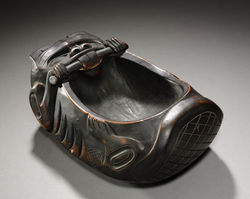 |  | 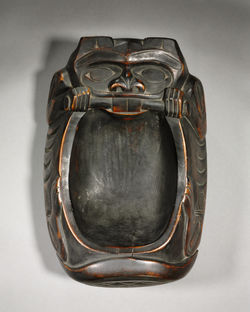 |
|---|
Material: wood
Size: 10.5 x 7.5 x 4.5 inches
First, take a minute or two to look closely at the images above. Write down your reaction to this object--what details do you notice? Why did you pick this object for your response paper? Make notes on things that you notice about it. Also, write down any questions you have about it--what kinds of things would you want to know about this object? Remember the questions we ask in class. You don't need to have answers for these questions yet, but keep them in your notes.
Once you have some questions written down, try to answer them by reading the information I've provided below about this object and its context.
What do we know about this object?
This object was produced on the Pacific Northwest Coast, perhaps among the Tlingit. Bowls were a major art form on the Pacific Northwest Coast, where they were used in many contexts including feasts that validated the rights and privileges of wealthy noble families. During the transition from subsistence to employment economies in the early 20th century, native carvers turned their skills toward creating bowls like this charming example for the curio market.
According to the Spirits of the West Coast art gallery, "the Beaver in Native American tradition teaches people to be productive and not limit their options. He teaches us to be persistent and to use available resources. The Beaver helps people understand the dynamics of teamwork and to appreciate each individual’s talents and contributions in order to accomplish anything. He is a builder of the mind, body, and soul and symbolizes creativity, creation, cooperation, persistence and harmony. The Beaver is also a hard worker and will not quit his job until he is done."
Some things to consider in your response paper:
-
What was your response to this object? What drew your eye? What do you like about it, or dislike? You are encouraged to use first person (I/me) in your response paper. I want to know what you think.
-
Consider the artistic details of this object carefully. What kinds of decisions did the artist make when they were creating this piece, and why? Use your art terminology.
-
Place this object in its historical and cultural context. What meaning might this object have had to the artist who made it? How (if at all) does it change the meaning when you consider that this was likely produced to be sold to non-Native owners, rather than used within a Native community?